
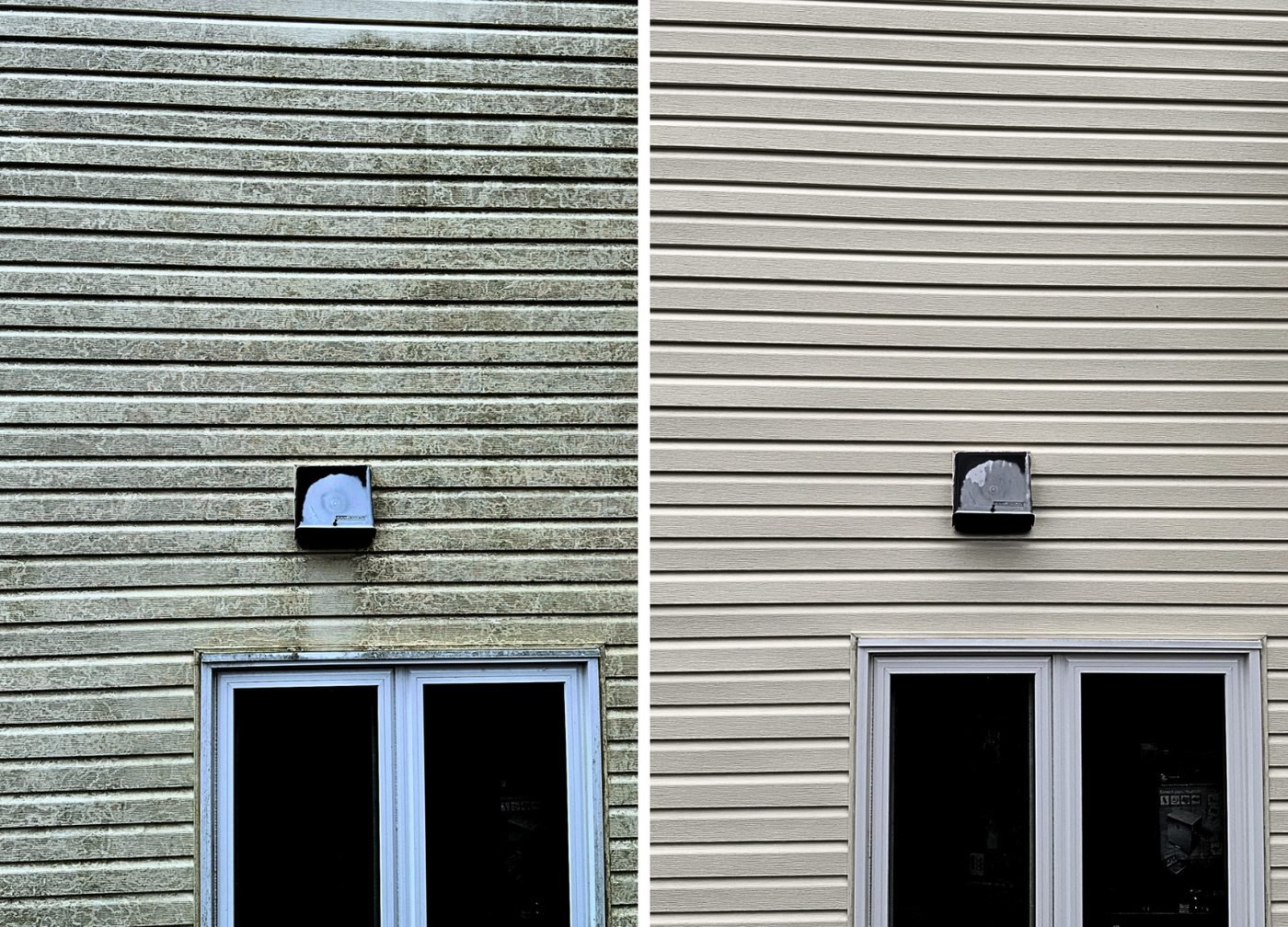
It's one of the most common questions we hear from homeowners across the HRM: should you pressure wash your vinyl siding, or is soft washing actually worth the extra step? The short answer is that for vinyl siding specifically, soft washing is almost always the safer and more effective choice — but the reasons why matter, especially if you're deciding between a DIY approach and hiring it out.
What Is Pressure Washing?
Pressure washing uses a motorized pump to force water through a narrow nozzle at high velocity — typically somewhere between 1,500 and 4,000 PSI depending on the machine. That force does the cleaning work mechanically, physically blasting dirt, grime, and organic growth off a surface. It's excellent for hard, non-porous surfaces like concrete driveways, stone, and brick, where there's no risk of forcing water behind or through the material.
What Is Soft Washing?
Soft washing flips the approach. Instead of relying on force, it uses a low-pressure application (often under 500 PSI — closer to a garden hose than a pressure washer) paired with a specialized cleaning solution. The solution is given time to dwell on the surface, breaking down algae, mildew, and mold at the root, before a gentle low-pressure rinse washes everything away. The cleaning happens through chemistry, not force.
Soft Wash vs. Pressure Wash: Side-by-Side
| Soft Washing | Pressure Washing | |
|---|---|---|
| Water Pressure | Low (under 500 PSI) | High (1,500–4,000+ PSI) |
| Risk to Vinyl Siding | Minimal — won't crack or warp panels | Real risk of cracking, warping, or forcing water behind panels |
| Effectiveness on Algae/Mildew | Kills growth at the root | Blasts away surface growth only |
| Results Last | Longer — typically 1–2+ years | Shorter — regrowth is faster |
| Best Suited For | Vinyl, wood, stucco, painted surfaces, roofing | Concrete, stone, brick, driveways, decks |
| Warranty Impact | Meets most manufacturer requirements | Can void vinyl siding warranties |
Why High Pressure Is Risky for Vinyl Siding
Vinyl siding is thinner and more flexible than the hard surfaces pressure washers are built for, and it's engineered to shed water in a specific direction — downward, out through weep holes at the bottom of each panel. High pressure works against both of those facts:
- Cracking and warping. Vinyl becomes more brittle as it ages and in cold weather. Concentrated high-pressure spray, especially held too close, can crack panels or warp them from the heat and force of the water itself.
- Water forced behind the panels. High pressure aimed at panel seams — even briefly, even by accident — can drive water up and behind the siding into the wall cavity, where it has no way to drain out. That's how mold and rot get started inside a wall, sometimes for years before it's ever visible from outside.
- Stripped caulking. The caulking around windows and doors isn't built to withstand direct high-pressure spray, and once it's compromised, that's a second pathway for water intrusion.
- Damaged weep holes. The small drainage holes built into the bottom of each siding course can get clogged with debris forced into them by high pressure, which defeats their entire purpose.
Why Soft Washing Suits Halifax Homes Especially
Every coastal city deals with exterior algae growth, but the HRM has a particular combination of factors that make soft washing more than just a nice-to-have:
- Salt air accelerates growth. The mineral content in coastal air feeds algae and speeds up regrowth, which is exactly why a treatment that kills growth at the root — not just knocks it off the surface — makes a real difference in how long results last.
- A lot of older housing stock. Neighbourhoods across the Halifax Peninsula, North End, South End, and Dartmouth's older streets have siding that's been through decades of Nova Scotia winters. That siding is more brittle and less tolerant of high-pressure force than anything installed in the last few years.
- Humidity keeps mildew coming back. Without addressing the organism itself, mildew regrowth in a humid maritime climate can outpace a once-a-year pressure rinse.
When Pressure Washing Is the Right Choice
None of this means pressure washing is a bad method — it's the right tool for a different job. Hard, non-porous surfaces like concrete driveways, walkways, stone, and brick are built to handle that force, and pressure washing is genuinely the faster, more effective option for stripping ground-in dirt and staining from those materials. The distinction isn't "pressure washing is bad" — it's using the right method for the surface in front of you.
The WashCrafters Approach
We're soft wash specialists first. Our house soft washing service uses low-pressure equipment and a biodegradable cleaning solution formulated to protect vinyl, wood, and painted siding while still killing algae, mildew, and mold at the root — the way it's meant to be cleaned, not just rinsed. For homes with heavier oxidation, we also offer a specialty Cleansol BC treatment most Halifax quotes don't even mention.
We're locally owned and fully insured, based in Bedford, NS, and we soft wash homes across Halifax, Dartmouth, Bedford, and the rest of the HRM every week. If you're deciding between DIY pressure washing and hiring it out, get a free quote and we'll tell you honestly what your siding actually needs.
Frequently Asked Questions
Is soft washing more expensive than pressure washing?
Generally the two are comparable in price. Soft washing sometimes costs a little more upfront because of the specialized cleaning solution involved, but since results last longer — typically 1–2+ years versus a faster regrowth after pressure washing — it's usually the better value over time, not just the safer one.
Does soft washing actually get siding as clean as pressure washing?
Often cleaner. Because soft washing addresses the algae and mildew at the root rather than just blasting away what's visible, it tends to leave siding looking cleaner for longer, even though the initial pass looks similar.
Is soft washing safe for older or original 1980s–90s vinyl siding?
Yes — it's actually the safer choice specifically because older vinyl is more brittle and less tolerant of high pressure. Soft washing was built for exactly this kind of siding.
How long do soft wash results last compared to pressure washing?
Soft washing typically holds up 1–2+ years before noticeable regrowth, since the cleaning solution kills algae and mildew at the root. A straight pressure rinse only removes what's visible, so regrowth tends to show up noticeably faster.
Kendall Scott
Owner/Operator, WashCrafters Exterior Home Solutions Inc. — Bedford, NS. Fully insured, 5.0 stars on Google, and a soft-wash specialist across the HRM.