
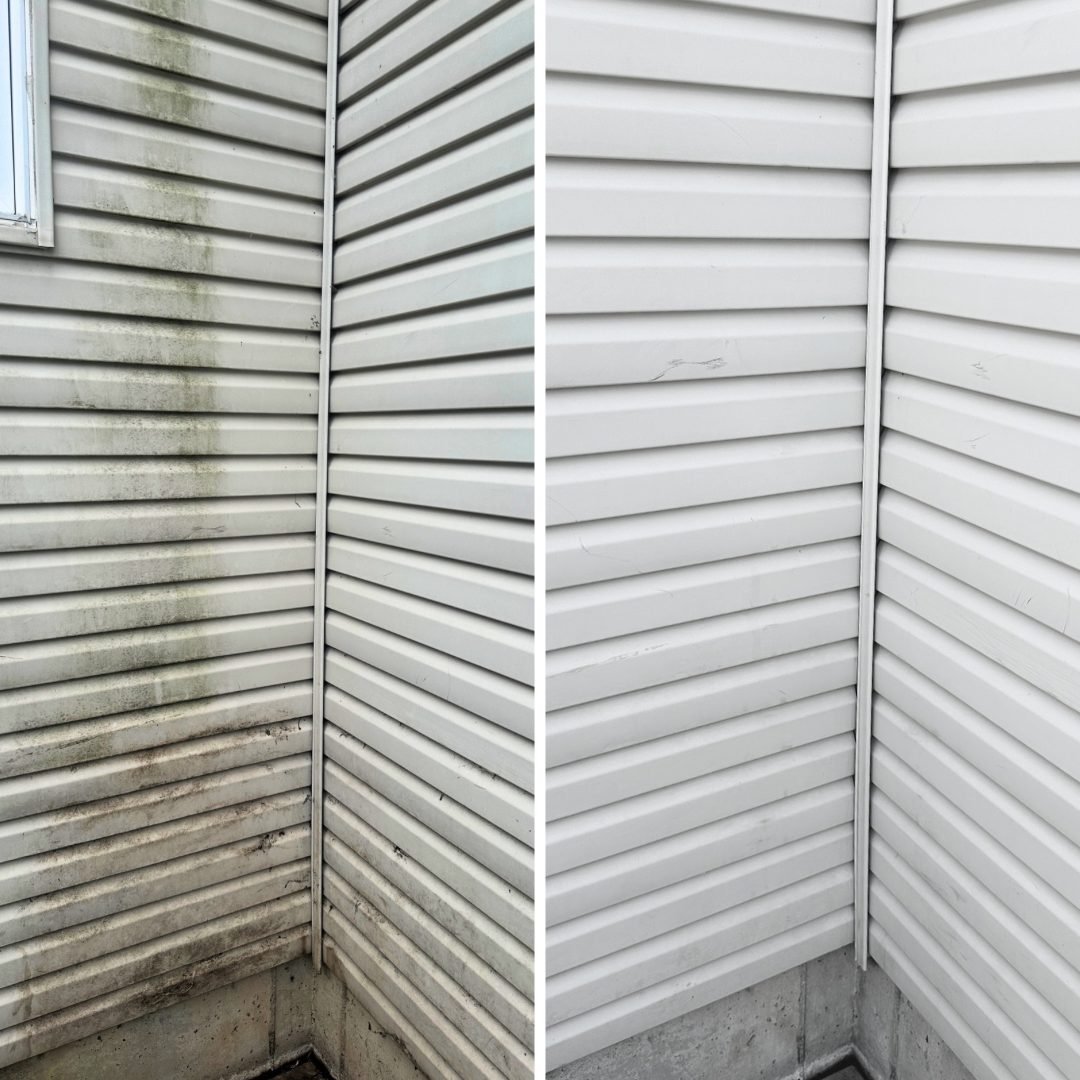
If you own a home in Halifax, Dartmouth, or Bedford, you already know the drill: vinyl siding that looked bright and clean last spring is streaked with green and grey by the time next summer rolls around. Salt air off the Atlantic, near-constant humidity, and shade from mature trees make the HRM one of the toughest climates in the country for exterior algae and mildew growth.
The good news is that vinyl siding is one of the easiest exterior materials to clean — if you use the right method. The bad news is that the wrong method (usually a rented pressure washer and more enthusiasm than caution) can crack panels, force water behind your siding, and in some cases void your manufacturer's warranty entirely.
This guide walks through exactly how to clean vinyl siding safely, the mistakes that cause the most damage, and how to tell when a job has outgrown a Saturday afternoon and needs a professional.
Why the Cleaning Method Matters More Than the Product
Vinyl siding is durable, but it's not indestructible. It's a relatively thin, rigid plastic panel that expands and contracts with temperature, interlocks with the panels around it, and relies on small weep holes at the bottom of each course to let trapped moisture drain back out. Clean it the wrong way and you're not just risking a cosmetic problem — you're risking water intrusion behind the panels, which can lead to mold growth and rot in the wall sheathing long before you'd ever notice it from the street.
Check your warranty before you start
Most vinyl siding manufacturers specify an approved cleaning method in their warranty documentation, and it's almost always a low-pressure wash with a mild, non-abrasive cleaner. Using a high-pressure washer or an unapproved chemical can void coverage on a product that's otherwise built to last 20–40 years.
What You'll Need for DIY Cleaning
- A soft-bristle, long-handled siding brush (never a stiff wire brush or abrasive scouring pad)
- A garden hose with a standard spray nozzle — not a pressure washer attachment
- A mild cleaning solution: a few tablespoons of dish soap per gallon of water, or a 70/30 water-to-white-vinegar mix for light algae and mildew
- A bucket for mixing your solution
- Safety glasses, and gloves if you're using anything stronger than dish soap
- Drop cloths or a quick pre-rinse for any plants and landscaping along the foundation
Skip anything with bleach as a first choice. It can work, but it's easy to overuse, it's hard on nearby plants, and repeated exposure can dull the finish on some siding profiles over time.
Step-by-Step: How to Clean Vinyl Siding by Hand
- Do a quick walk-around first. Look for any cracked, loose, or warped panels before you start. Cleaning won't fix existing damage, and you don't want to force water into a panel that's already compromised.
- Rinse landscaping and pre-wet the siding. A quick rinse of nearby shrubs and flower beds protects them from your cleaning solution, and pre-wetting the siding itself helps prevent streaking.
- Work in manageable sections, top to bottom. Apply your cleaning solution with the soft brush in sections roughly 3–4 feet wide, scrubbing gently along the grain of the panels.
- Rinse before the solution dries. Don't let soap sit and dry on the siding in the sun — it causes streaking that's more work to fix than the original grime.
- Rinse from the ground up with a garden hose. A standard hose nozzle held at a gentle angle is plenty of pressure to remove loosened dirt and soap without forcing water up under the panel laps.
- Let it air dry and inspect your work. Stubborn dark streaks or green staining that doesn't lift with a second pass are usually a sign of algae that's established itself below the surface — more on that in the next section.
Common Mistakes That Damage Vinyl Siding
Most of the vinyl siding damage we see in the HRM traces back to one of these mistakes:
The #1 mistake: high-pressure washing
Many consumer and rental pressure washers put out far more force than vinyl siding is built to handle. Held too close, at too high a setting, or angled upward, that pressure can force water behind the panels and into the wall cavity — where it has nowhere to go and no reason to dry out. That trapped moisture is exactly how mold and rot get started inside a wall, often long before there's any visible sign on the outside.
- Spraying upward into the panel seams. Vinyl siding is designed to shed water downward. Aiming a hose or wand upward — even at low pressure — pushes water directly into the laps it's meant to keep out.
- Using harsh chemicals or straight bleach. Undiluted bleach and other harsh cleaners can discolor vinyl over time and are hard on siding, trim, and anything growing nearby.
- Cleaning in direct sun or high heat. Solution dries before it can do its job, leaving streaks that take more scrubbing to correct than the original dirt did.
- Skipping a test patch. Always try a new cleaner on a small, inconspicuous section first — especially on older or sun-faded siding, which can react differently than newer panels.
- Using abrasive brushes or scouring pads. These can scratch the surface finish, leaving the siding rougher and more prone to catching dirt in the future.
- Getting too close to windows, outlets, and light fixtures. Both pressure washers and garden hoses can force water into places it was never meant to go if you're not paying attention to what's behind the panel you're cleaning.
When to Call a Professional
DIY cleaning works well for light, regular maintenance — a once-a-year wash on siding that isn't heavily stained. It's time to call a professional when:
- Algae or mildew staining is heavy, widespread, or has been building for several years
- Your home is two storeys or taller and safe cleaning would mean extended ladder work
- Your siding has a chalky, oxidized look that a simple soap-and-water wash won't touch
- You want the job done once, done right, and don't want to spend a weekend on it
- You're not confident about your warranty terms and would rather not risk it
This is exactly where a professional soft wash service earns its keep. At WashCrafters, we use low-pressure equipment paired with an eco-friendly cleaning solution formulated specifically to lift algae, mildew, and oxidation from vinyl siding without the risk that comes from a pressure wand — and without putting your manufacturer's warranty in question. For siding with heavier oxidation, we also carry a specialty Cleansol BC treatment that most quotes in the HRM don't even offer.
We're a locally owned, fully insured crew based right in Bedford, NS, and soft washing homes across the Halifax Regional Municipality is what we do every day — not a side offering. If you'd rather not risk your siding on a rental pressure washer, get a free quote and we'll take care of it.
Frequently Asked Questions
How often should vinyl siding be cleaned?
Once a year is typical for most Halifax homes. Shaded, north-facing walls or homes close to trees or the water often need it more like every 8–10 months, since algae and mildew regrow faster in those conditions.
Can I use a pressure washer on vinyl siding at all?
Only with real caution — a wide fan tip, low PSI, and the wand held at a safe distance and angled downward. Many professionals avoid pressure washers on siding entirely and use soft washing instead, precisely because it's so easy to force water behind panels by accident.
Does soft washing actually kill algae, or just remove it?
It kills it. The cleaning solution used in soft washing is formulated to break down algae, mildew, and mold at the root, not just rinse away what's visible on the surface. That's why soft-washed siding tends to stay cleaner longer than a straight pressure rinse.
Will cleaning fade or discolor my siding?
Done properly, no. Fading and discoloration usually come from harsh chemicals, undiluted bleach, or letting cleaning solution dry in direct sun rather than from the act of cleaning itself.
Is DIY cleaning bad for my siding warranty?
It depends entirely on your manufacturer's documentation. Many warranties specifically require low-pressure cleaning methods and approved cleaning agents. If you're not sure what your warranty allows, either check the paperwork first or hire a professional who already works within those standards.
Kendall Scott
Owner/Operator, WashCrafters Exterior Home Solutions Inc. — Bedford, NS. Fully insured, 5.0 stars on Google, and a soft-wash specialist across the HRM.