
Quick answer
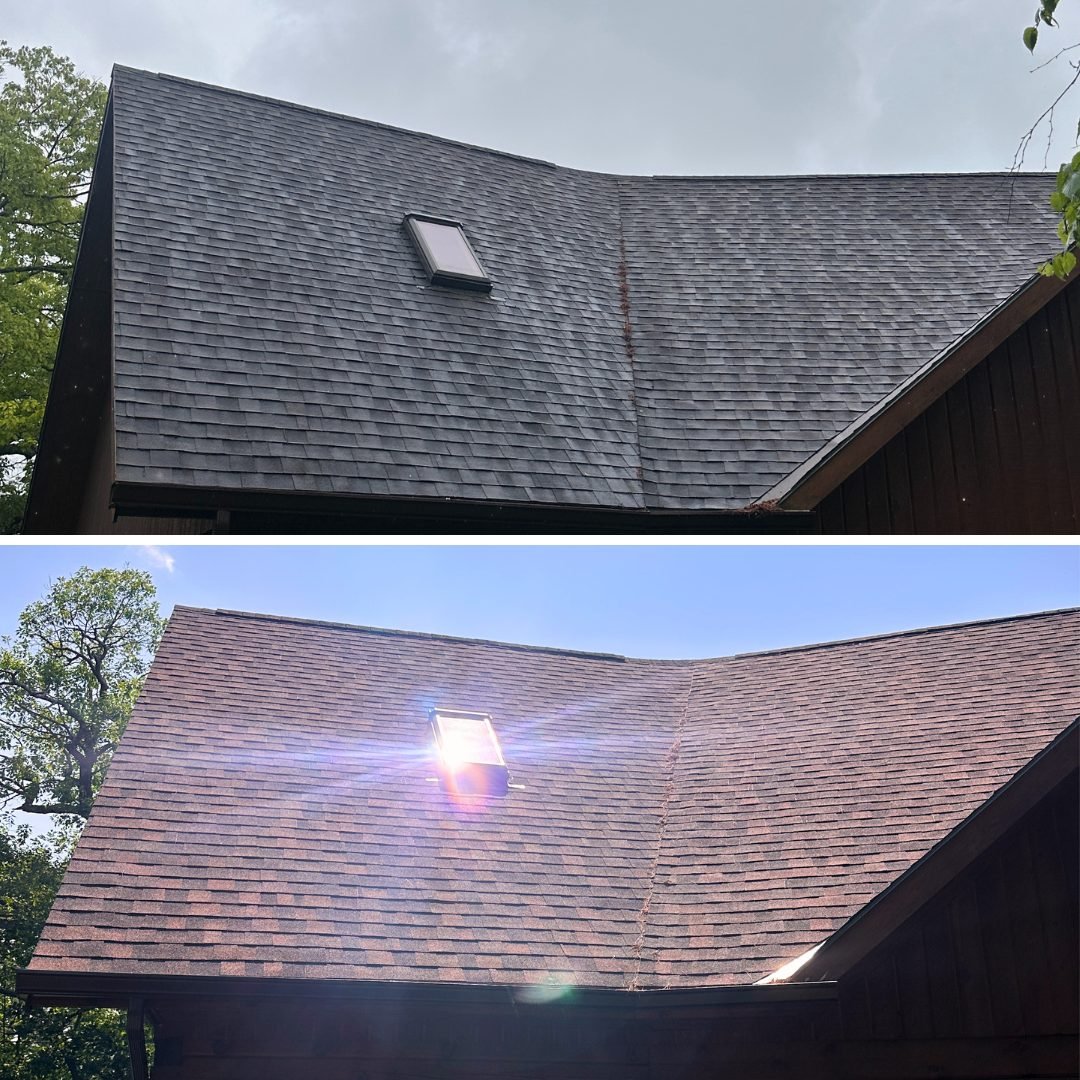
Those dark streaks running down your shingles are almost always gloeocapsa magma, a UV-resistant bacteria that feeds on the limestone filler in asphalt shingles. It's not dirt, soot or mold, it doesn't rinse off in the rain, and it gets worse over time if it's left alone. It won't hurt you to be near it, but it does shorten your roof's lifespan, and a pressure washer is the wrong way to remove it.
If you've noticed dark streaks running down from your roof's ridge line, especially on the side that gets the least sun, you're looking at one of the most common roofing questions we get asked in the HRM. It's also one of the most misunderstood. Most people assume it's dirt, or soot from a chimney, or mold. It's none of those. Here's what's actually growing up there, why Halifax roofs get hit with it so hard, and what actually works to get rid of it.
What Is Gloeocapsa Magma?
Gloeocapsa magma is a type of cyanobacteria, sometimes loosely called blue-green algae. It lands on a roof as an airborne spore, settles into the granular surface of an asphalt shingle, and doesn't stop there. It eats the limestone that shingle manufacturers mix into the granules for durability. That's the whole reason it shows up on asphalt roofs specifically and almost never on metal or slate: there's nothing on those surfaces for it to eat.
The bacteria is actually blue-green when it first takes hold. What you're seeing is the dark, UV-resistant coating it grows over itself to survive direct sun, the black or dark brown streaking most homeowners just call "the stains."
Why Does It Show Up as Streaks?
It spreads by spore, riding wind and rain down the slope of the roof. A colony usually starts small, near a vent, in a valley, wherever the roof stays damp a little longer than everywhere else, then works its way downhill in the direction water actually flows. That's why you get streaks instead of an even discoloration. North-facing slopes and anything shaded by trees show it first, and worst, simply because they take longer to dry out after rain or morning dew.
Is It Actually Damaging My Roof?
It's more than cosmetic, and that surprises most homeowners. The colony holds moisture against the shingle, and that trapped moisture speeds up granule loss, which is what actually protects a shingle from UV damage. Lose granules faster than you should, and the roof ages faster. Full stop. Leave heavy growth alone for years and it can genuinely shorten how long your roof lasts, on top of being the first thing anyone notices looking at your house from the curb.
Black Streaks vs. Moss vs. Ordinary Dirt
| Gloeocapsa Magma | Moss | Ordinary Dirt / Debris | |
|---|---|---|---|
| Appearance | Dark streaks, usually running downhill | Raised, fuzzy green or grey-green clumps | Dull, uneven grime, no real pattern |
| Feeds On | Limestone filler in the shingle itself | Organic debris trapped on the roof surface | Nothing, it's just accumulated debris |
| Rinses Off With Rain? | No | No | Mostly, yes |
| Damages Shingles? | Yes, over time | Yes, and faster, since it holds more moisture | Not directly |
| Typical Location | North-facing or shaded slopes | Shaded valleys, under overhanging branches | Anywhere, especially near trees |
It's common to have more than one of these at once. A shaded, north-facing roof often shows gloeocapsa streaking on the open shingle area and moss building up in the valleys and around vents, where debris collects and holds even more moisture.
Why Halifax Roofs Get So Much of This
Humidity, salt air off the harbour, and constant freeze-thaw cycles through the winter add up to close to a perfect growing environment for this stuff. That's why it's such a common question here specifically, more than in drier parts of the country. Roofs on the Peninsula, in Dartmouth's older neighbourhoods, and anywhere with heavy tree cover tend to show it earlier and worse than roofs somewhere dry and sunny.
Why You Shouldn't Pressure Wash It Off
It's tempting to treat black streaking like a stain on your driveway and just blast it off. Don't. A pressure washer aimed straight at shingles strips the same granules the bacteria's already after, which shortens the roof's life instead of extending it, and can void a manufacturer's warranty outright. There's also a real risk of driving water up under the shingles instead of off them.
The right way to do it is a low-pressure application, closer to a garden hose than a pressure washer, combined with a solution that kills the bacteria at the source. Do it that way and the streaking rinses off naturally over the next few weeks, instead of getting stripped off along with the shingle underneath it.
How Much Does Roof Cleaning Cost for Black Streak Removal?
Roof Soft Wash
$279 – $999
Most Halifax two-storey roofs land around $450–$699
- Small roof (up to 1,500 sq ft): $279–$449
- Medium roof (1,500–2,500 sq ft): $450–$699
- Large roof (2,500–3,500 sq ft): $700–$999
- Extra-large or complex roof (3,500+ sq ft): $1,000+, custom quote
Those prices cover the standard low-pressure treatment for algae and black streaking, which is what most Halifax roofs actually need. If moss has also built up and needs manual removal before treatment, that adds $150–$350 depending on how much of the roof is affected. See the full roof cleaning cost breakdown for a size-by-size look at pricing.
Will it come back?
Eventually, yes. The spores that cause gloeocapsa magma are airborne and constantly landing on every roof in the HRM. Most Halifax homes go 2 to 3 years between cleanings before streaking becomes noticeable again, though shaded or north-facing roofs sometimes need it sooner.
The WashCrafters Approach
This is what our roof cleaning service is built around: a low-pressure application that kills gloeocapsa magma, moss and lichen at the source, no pressure wand anywhere near your shingles, ever. We'll check your gutters while we're up there too, and it's safe for asphalt, architectural and cedar roofing alike.
If you're standing in your driveway right now trying to decide whether that's algae, moss, or something else entirely, just send us a photo and ask. We're based in Bedford and up on HRM roofs most weeks of the year, so it's usually an easy call.
Frequently Asked Questions
What are the black streaks on my roof?
They're almost always gloeocapsa magma, a UV-resistant cyanobacteria that feeds on the limestone filler in asphalt shingles. It's not dirt, soot or mold, and it doesn't wash off with rain. It builds up gradually, usually starting on the north-facing slope, and darkens over several seasons.
Is gloeocapsa magma harmful to my health?
No, it isn't known to pose a health risk to people or pets. The concern is what it does to your roof, not your health: it holds moisture against the shingle surface, which speeds up granule loss and shortens the roof's usable lifespan.
Will the black streaks go away on their own?
No. Rain rinses off loose dirt but does nothing to a living bacterial colony. Left alone, gloeocapsa magma spreads gradually, typically getting darker and covering more of the roof each year until it's treated.
Can I pressure wash the black streaks off my roof?
You shouldn't. A pressure washer aimed at shingles strips the protective granules along with the bacteria, which shortens the roof's life and can void a manufacturer's warranty. Professional roof cleaning uses a low-pressure application instead, which kills the growth at the source and lets it rinse away naturally.
How much does it cost to remove black streaks from a roof?
In Halifax, a standard low-pressure roof soft wash runs $279 to $999 depending on roof size, with most two-storey homes landing around $450 to $699. Heavy moss that needs manual removal before treatment adds $150 to $350.
Will the streaking come back after cleaning?
Eventually, yes, since the bacteria's spores are airborne and re-colonize over time. Most Halifax roofs go 2 to 3 years before streaking becomes noticeable again, though shaded or north-facing roofs can need attention sooner.
Kendall Scott
Owner/Operator, WashCrafters Exterior Home Solutions Inc. — Bedford, NS. Fully insured, 5.0 stars on Google, and a soft-wash specialist across the HRM.